After the October Surprise: Why Automated Patching for Infrastructure Starts with a System of Record
Halloween was hardly the scariest thing to happen in late October 2026. In a chaotic week, two pre-authentication remote code execution flaws in PHP, hidden for 22 years and surfaced by an AI model, rocked not just the networking community but the entire corporate world.
The resulting panic made one thing painfully obvious: You can’t patch what you can’t see, and you can’t patch fast enough by hand. Attackers now exploit vulnerabilities faster than most enterprises can find the devices that run them. Automated patching for infrastructure is the only way to close that gap at scale, and it is only as fast and safe as the data behind it.
What happened in October 2026?
PHP issued fixes, but the damage was done. The flaws put millions of websites at risk, and the repercussions were immediate:
- Palo Alto Networks confirmed every supported version of PAN-OS and Panorama was affected, with no fix available.
- Cisco investigated 18 products and 13 cloud services; Fortinet worked through eleven.
- Cloudflare reported attack attempts on its network jumped from thousands to millions within hours.
- The NSA, NCSC and CERT-EU told operators to take unpatched systems offline.
“Please go to your boards and ask for help right now,” Jason Clinton, deputy CISO for Anthropic, implored on X. “Not for AI, for the basics.” Salesforce CEO Marc Benioff agreed: “Jason is 100% right. Code red.”
AI has changed the math on vulnerability remediation
AI is enabling attackers to increase the volume and pace of exploitations, and vulnerability remediation isn’t keeping up:
- Between January 1 and October 13, 2026, 79,680 CVEs were published, 2.15 times the same window in 2025, according to Empirical Security.
- Google’s 2026 M-Trends report puts the time from disclosure to exploitation at minus seven days, meaning attackers increasingly strike before a patch exists.
- Verizon’s 2026 Data Breach Investigations Report found exploitation is now the leading initial access method, at 31% of breaches. Only 26% of known-exploited vulnerabilities were fully remediated, and median patching time rose from 32 to 43 days.
Why automated patching for infrastructure stalls: You can’t patch what you can’t find
Most delays in the patching process happen before anyone touches a device. The biggest problem is with network visibility. When an advisory lands, engineers spend days hunting through spreadsheets, consoles and CMDB exports to work out which devices run the affected software.
Attackers don’t have that problem. On October 16, Palo Alto’s Unit 42 disclosed that attackers who compromised FortiManager walked away with an inventory of more than 500 downstream FortiGate firewalls, then used it to take root on them. The attacker had a better asset inventory than the defender.
Network infrastructure is the front line: You can’t install an agent on a router, and you can’t scan what isn’t routable. That makes network patching the hardest part of the job.
Bad data hurts automated patching for infrastructure in two directions:
- It’s too slow. Every hour spent reconciling lists is an hour of exposure.
- It’s too risky: Pointed at an outdated inventory, automation misses critical systems, changes the wrong devices or breaks dependencies nobody recorded.
As RackN’s Kiera Quinn puts it, without accurate data “patching becomes guesswork with paperwork attached.”
Why automated patching for infrastructure needs a system of record
Scanners and vendor advisories tell you what software is vulnerable. A system of record tells you where it runs, what depends on it, who owns it, what it should look like after the fix, and how automation can reach it. That last point is the most overlooked. Every device automation can’t reach falls back to a slower manual process.
That gives leaders a useful measure: automation reach, the share of in-scope infrastructure your automation can actually access and manage. Reach sets the ceiling on any automated patching program.
Context also helps improve judgment. In one Tuskira analysis, among 1,200 vulnerable instances that all looked urgent, only three needed emergency action once organizations weighed reachability and exposure.
Five questions every board should ask now
When exploitation starts before patches exist, infrastructure inventory becomes critical to minimizing business risk and strengthening resilience. Every board should ask its infrastructure leadership:
- If a critical vulnerability were disclosed today, how long would it take to list every affected device and its owner? Minutes, or weeks?
- Is that inventory discovered from the live network, or is it a spreadsheet someone updates when they remember?
- What share of those devices could our automation reach right now, without manual work?
- Have we agreed in advance which classes of change can run automatically, and who authorizes emergency remediation late on a Friday?
- After we patch, do we verify the fix took and the estate hasn’t drifted?
If the first answer is measured in days, the bottleneck is your data, not your automation. No amount of spending on automated patch management tools will fix it.
An workflow for automated patching for infrastructure: From advisory to remediation in hours
The teams that identified affected systems in minutes during October’s panic ran a continuous loop. With a trusted system of record in place, automation runs it within boundaries people set in advance:
- Discover. Find everything on the network automatically, all the time. Unknown devices are the attacker’s favorite devices.
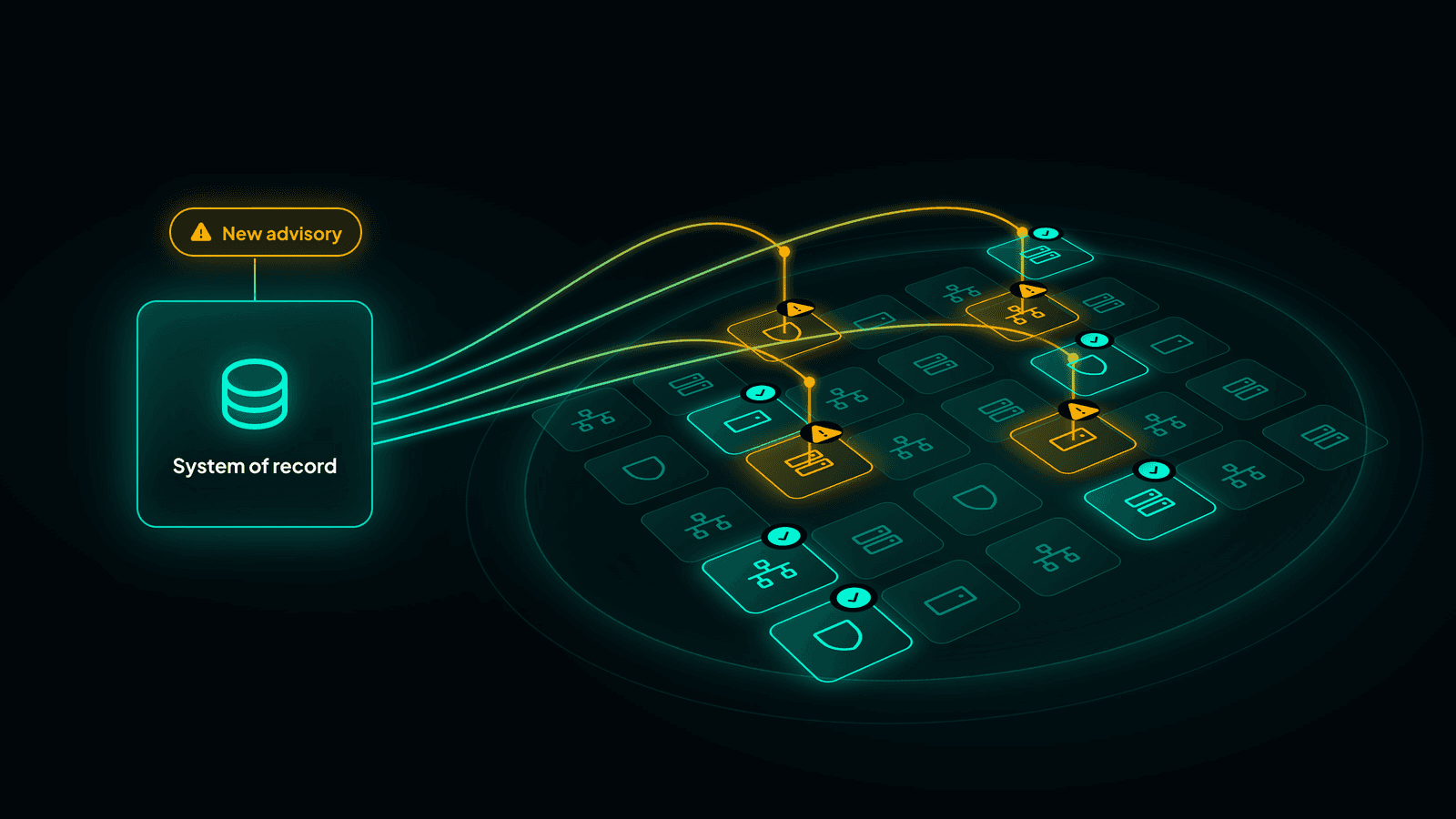
- Scope. When an advisory lands, correlate it with the system of record to list every affected device, with location, owner and management access.
- Prioritize. Join that list against CISA’s KEV catalog and exposure data. Internet-reachable, critical and exploited goes first; the rest is a queue.
- Patch or mitigate. Apply an approved fix in staged waves with health checks. No fix yet? Restrict management interfaces or disable the vulnerable service.
- Verify and repeat. Confirm each device matches its intended state, catch drift and go again.
Start with one bounded domain, such as locking down exposed management interfaces, then expand one class of change at a time.
Fix the foundation first
Discovery has been automated at machine speed. At most organizations, remediation still runs at the speed of a human opening a spreadsheet. Until that changes, attackers will keep knowing your infrastructure better than you do.
This is the problem we built NetBox Labs to solve. NetBox is the open-source system of record for networks and infrastructure, and NetBox Assurance builds and maintains that baseline from the live network rather than from memory. Paired with automation systems such as Red Hat Ansible, it turns every new advisory into a targeted job instead of a scavenger hunt.
Contact us to find out how to make automated patching for infrastructure safe and fast in your network.
