Multi-Vendor by Design: Seven New Integrations for the Stack You Actually Run
Three months ago we opened preview for two integrations, Infoblox NIOS and Cisco ACI. Today both are generally available. They arrive alongside three more GA integrations, Microsoft DNS, Microsoft DHCP, and Proxmox VE, and two brand-new public previews, Arista CloudVision and AWS VPC IPAM. Seven integrations, shipping together, under one idea: multi-vendor by design.
Enterprise infrastructure is multi-vendor, multi-cloud, and multi-hypervisor by default. Cisco and Arista. Infoblox and Microsoft and AWS. VMware and Proxmox. Almost no team standardizes on one IPAM, one fabric vendor, or one hypervisor. Flexera finds 73% of organizations run hybrid cloud, and the mix only spreads from there. The clearest current example is the post-Broadcom VMware shift, which has many enterprises standing up a second hypervisor. Yet the system of record most teams rely on is only as accurate as the manual reconciliation keeping it aligned with all of those sources, and that manual work is both an audit risk and an outage risk.
This wave closes that gap. It makes the NetBox Labs platform a governed system of record your teams, your automation, and your AI agents can trust across a multi-vendor, multi-cloud, multi-hypervisor estate. It is one place that plugs into whatever you run at each layer and stays reconciled against what is actually deployed. That matters more every quarter. As agentic AI moves into IT operations (Gartner projects 70% of enterprises will use it by 2029), the automation acting on the record depends on it staying current.
How it works
Every integration in the wave works the same way. A lightweight agent discovers data one-way and read-only from the source system, then stages it in NetBox Assurance as deviations. Nothing lands in your record until someone reviews and approves it. Because each integration re-syncs on a schedule, this is not a one-time import. Every run re-discovers the source and surfaces the difference between what is actually deployed and what is in the record, so new and changed objects show up as reviewable deviations instead of silent staleness. Today the integrations detect additions and changes, not removals. A decommissioned device or VM stays in the record until someone removes it. Automatic detection of decommissioned objects, the first phase of object lifecycle management, is targeted for later this year.
Unify your IP estate
IP, DNS, and DHCP data is scattered across more systems than ever. EMA finds only 35% of enterprises consider their DDI strategy fully successful, and the reason is structural. Address data lives at the same time in on-prem incumbents, Windows servers, and cloud-native IPAM, with no single view of it. Four integrations bring that estate into one reviewed record.
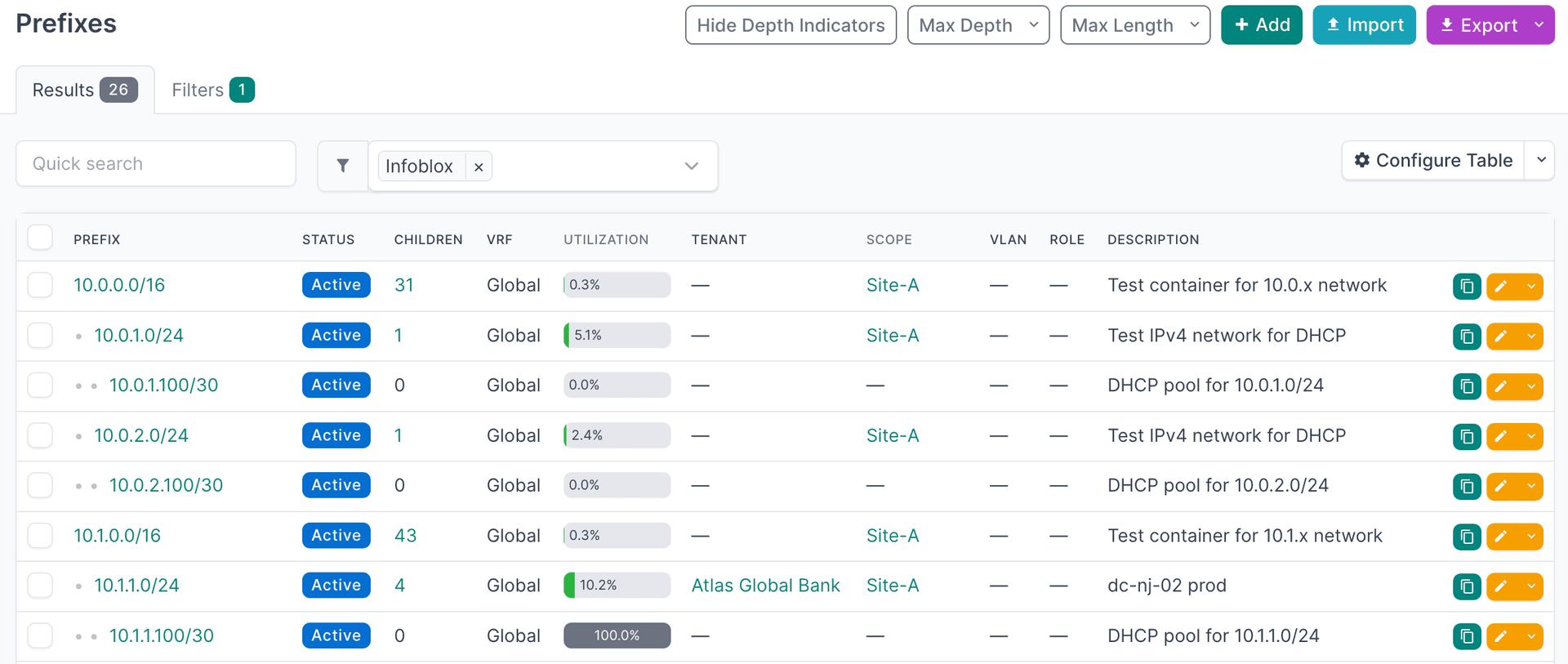
- Infoblox NIOS (GA) discovers and syncs IPAM, DHCP, and VLAN data from the enterprise DDI incumbent. The classifications, notes, and site context teams maintain in Infoblox come across too, so the record is immediately usable, not just populated with bare IPs. Scope by network view to phase a rollout, and keep high-churn lease data out until you want it.
- Microsoft DNS (GA) brings Windows Server DNS into NetBox by populating the dns_name field on IP addresses from A, AAAA, and PTR records, and keeps it current. The hostname data teams and automation expect is already there, with nothing installed on the DNS server.
- Microsoft DHCP (GA) discovers Windows Server DHCP scopes, exclusions, reservations, and opt-in leases as first-class NetBox objects, for a current picture of how IPv4 space is actually used.
- AWS VPC IPAM (public preview) extends the same view to cloud address space, modeled correctly for the overlapping CIDRs every multi-environment AWS estate has. Each VPC gets its own VRF, so dev, staging, and prod can all sit on 10.0.0.0/16 without colliding.
The result is one reviewed view of address space across on-prem and cloud, Infoblox and Microsoft and AWS, updated on every sync.
Map your multi-vendor fabric
Fabric inventory is usually trapped in vendor consoles, and getting it into a shared record means manual export or brittle scripts. Multi-vendor fabrics make it worse, forcing teams to run two management planes with no common record. Generic discovery tools flatten everything, discarding the pod, tenant, and topology context engineers rely on. This wave takes the opposite approach.
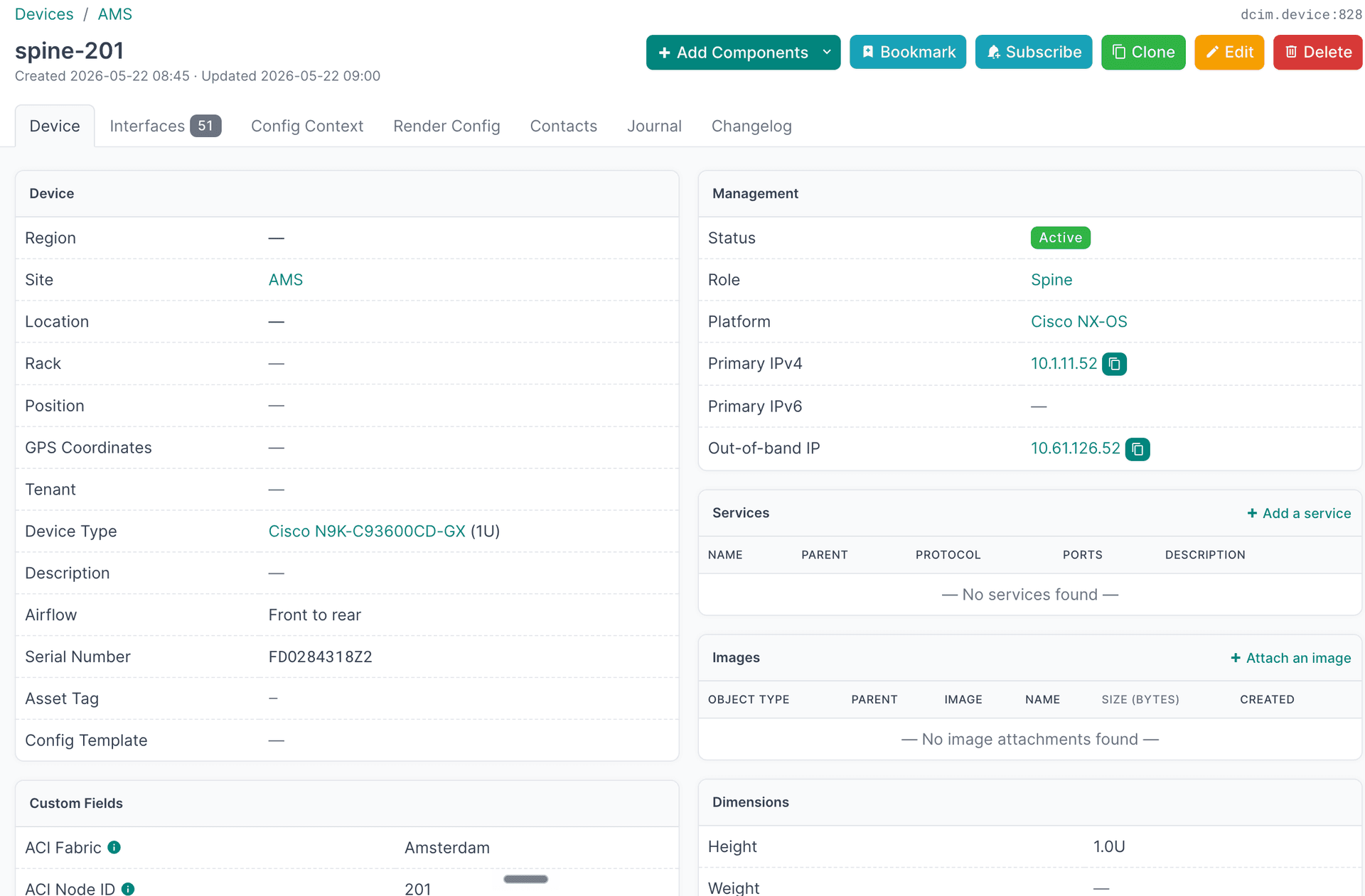
- Cisco ACI (GA) discovers the full fabric (devices, interfaces, VRFs, prefixes, VLANs, and IPs) with pod and tenant context preserved, not reduced to a generic dump, and interface detail accurate down to the transceiver. Mid-incident, that means finding which leaf holds an IP, along with its VRF, tenant, and VLAN, in one place instead of a manual cross-check.
- Arista CloudVision (public preview) brings the Arista EOS estate into the platform from CloudVision Portal (CVP) or CloudVision as a Service (CVaaS), mapping sites and roles from the CloudVision tags teams already maintain, with IPAM included, not just device inventory.
Cisco and Arista in one record, with no single-fabric lock-in. Multi-vendor is the design point here, not an afterthought.
Track your hypervisors
In the post-Broadcom shift, Gartner expects more than a third of today’s VMware workloads to run on another platform by 2028. More teams now run more than one hypervisor, and they need a record that holds through the transition.
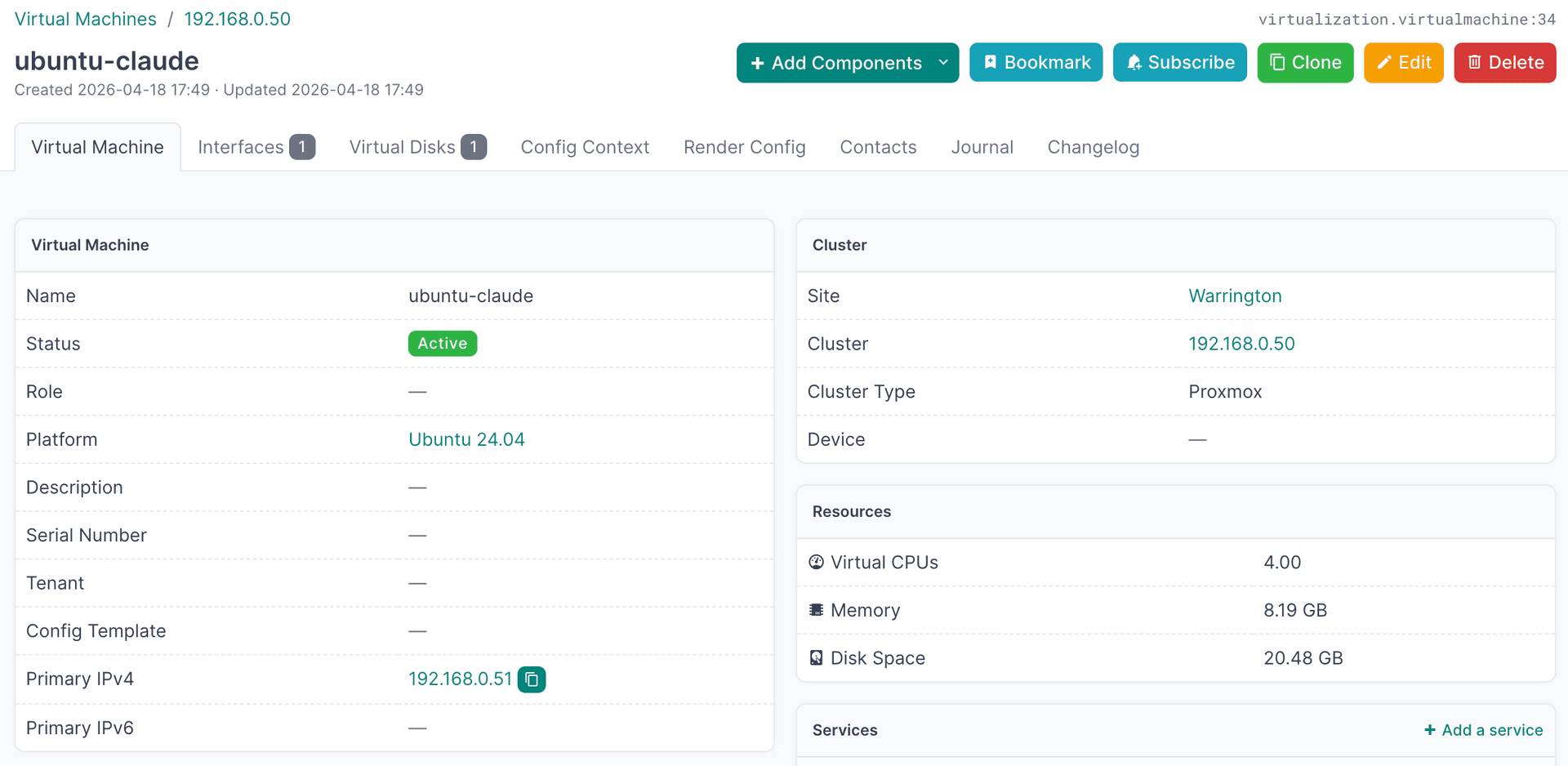
- Proxmox VE (GA) discovers the full cluster into the platform, including nodes, VMs, containers, interfaces, IPs, VLANs, and disks. It joins the existing VMware vCenter integration, which makes the NetBox Labs platform multi-hypervisor today. As workloads move from VMware to Proxmox, they show up in NetBox the same way, so a migration does not also become an inventory gap (QEMU VM IP discovery requires the in-guest agent; containers are exempt).
One unified VM inventory across mixed and mid-migration estates, whatever you run today and adopt tomorrow.
Getting started
All seven integrations run on NetBox Enterprise and NetBox Cloud with NetBox Assurance. The five GA integrations are available to Assurance customers today. Arista CloudVision and AWS VPC IPAM are available in public preview. Reach out to your account team if you’re interested in trying them out. Together with existing integrations for VMware vCenter, ServiceNow, and more, the NetBox Labs platform now spans DDI and IPAM, multi-vendor fabric, and virtualization in one governed system of record.
Explore the integration documentation for Infoblox NIOS, Cisco ACI, Microsoft DNS, Microsoft DHCP, Proxmox VE, Arista CloudVision, and AWS VPC IPAM, or contact our team for a walkthrough.